June 2026 · 9 min read · Clinical Protocol
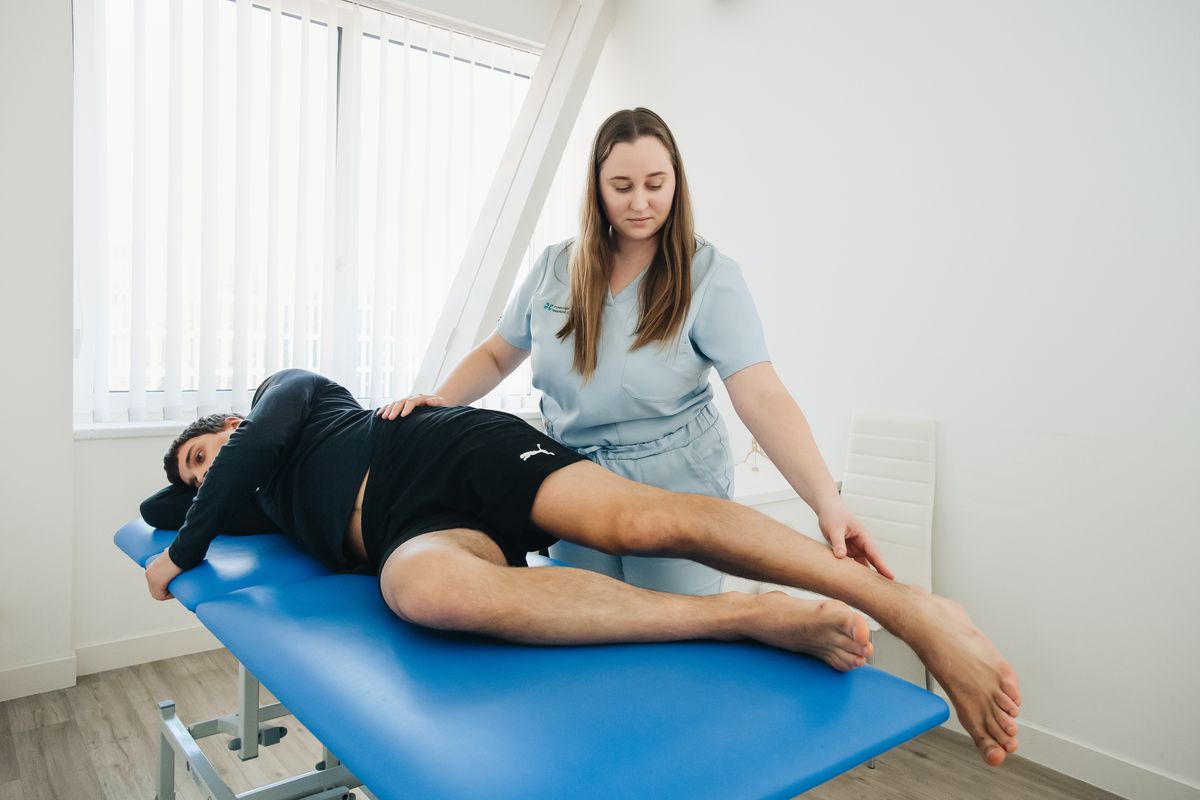
What Is GTPS / Gluteal Tendinopathy?
Greater trochanteric pain syndrome (GTPS) is pain and tenderness over the outer side of the hip, often radiating down the lateral thigh. In most cases the underlying problem is gluteal tendinopathy — an overload injury of the gluteus medius and minimus tendons where they attach to the greater trochanter — and not "bursitis," as the condition was historically labeled ("trochanteric bursitis"). It is especially common in women aged 40–60, in runners, and in patients with asymmetric mechanical load on the pelvis. GTPS interferes significantly with walking, climbing stairs, and lying on the affected side.
How PEMF Works on the Gluteal Tendons
PEMF (Pulsed Electromagnetic Field) is a non-invasive technology that delivers a pulsed electromagnetic field into the tissue and acts on cellular processes: improved microcirculation, reduced edema, and support for the cells that rebuild the tendon. The mechanism does not rely on heat or mechanical pressure, so treatment is comfortable, painless, and requires no injections or surgery. In the clinic, the system treats the hip region while the patient lies or sits comfortably, as part of a program that also includes progressive strengthening of the pelvic muscles.
What Does the Evidence Say?
The evidence supports PEMF for tendon and soft-tissue pain, mostly in trials where it was combined with exercise, although there is not yet a large dedicated randomized trial of PEMF specifically in GTPS. A 2025 multicenter randomized controlled trial (PMC11914662, n=91 completers, 5 orthopedic clinics) measured a 36% pain reduction in soft tissue vs. only 10% with standard care (p<0.0001), alongside a 55% reduction in medication use. Important clarification: this trial studied joint and soft-tissue pain in general — not GTPS specifically; its findings are extrapolated to the general tissue-level efficacy of PEMF in tendinopathies. A review in the Aesthetic Surgery Journal (Strauch et al. 2009, Albert Einstein, PubMed 19371845) describes how PEMF relieves soft-tissue pain and edema and promotes angiogenesis. Because the literature is not uniform, PEMF at PainFree is always given together with progressive gluteal loading exercise and load management, the standard evidence-based care for GTPS.
Clinical Protocol
- Patient positioning: sitting or lying down; coils placed around the greater trochanter and gluteal muscles
- Treatment frequency: 1–2 times per week; up to 3 times weekly in acute or severe cases at the start (rest day between sessions)
- Session duration: approximately 30 minutes
- Series length: minimum 3 sessions; continuation determined by the clinician based on tissue response and pain improvement
- Expected timeline: initial improvement sometimes after just a few sessions; full measured improvement after several weeks of consistent treatment
- Combination therapy: PEMF combines well with physiotherapy, osteopathy, acupuncture, shockwave, and active rehabilitation
PEMF vs. Conventional Treatments for Lateral Hip Pain
| Parameter | PEMF | Corticosteroid Injection | Shockwave |
|---|---|---|---|
| Pain reduction (medium–long term) | Cumulative, durable (soft tissue, PMC11914662) | Fast relief but regression over the medium term | Variable efficacy |
| Invasiveness | None | Invasive (injection) | Non-invasive |
| Patient experience during treatment | Comfortable, painless, no side effects | Local injection pain; risk of tendon weakening with repeated injections | May cause transient local pain |
| Practitioner hands-on time | 0 minutes (hands-free — no close supervision) | ~15 minutes injection work | ~20 minutes manual work |
| Recovery time | None | None | None |
| FDA cleared | Not for the devices we supply — no FDA 510(k) or PMA. Other PEMF devices hold 510(k) for pain/edema; clearance is granted per model, not to the technology. Our Magnetobox unit carries CE. | Yes | Yes |
Who Can Receive Treatment?
Broad eligibility: women in perimenopause (the most common GTPS group), runners and endurance athletes, patients with pelvic asymmetry or muscle imbalance, patients with persistent lateral hip pain after hip replacement, athletes and children of any age recovering from tendon overload, and chronic-pain patients who did not respond to conservative care. Contraindications are narrow: pregnancy, implanted pacemaker, active epilepsy (consult a neurologist), and active malignancy.
What This Means for Clinic Investors
Lateral hip pain is a high-volume, under-served complaint in physiotherapy, orthopedic, and rehabilitation clinics. Because PEMF is hands-free, the patient lies with the system while the team treats other patients in parallel — adding a research-backed treatment without adding staff hours. The system (in bed, arch, or coil configuration) is matched to the clinic's patient volume and pays back the investment within a few months. Treatment pricing in the Philippine market is typically ₱1,500–₱2,500 per session. PainFree is the largest and most veteran provider in this field, with 70+ Israeli clinics serving a population of 9M — now expanding to the Philippines.
Frequently Asked Questions
Can PEMF replace physiotherapy for GTPS?
No. You do not have to choose: PEMF leads the clinic treatment to reduce pain and support tendon healing, and the physiotherapy and rehabilitation exercise you already do (especially progressive gluteal strengthening and load management) continue together with it.
Is the treatment painful or does it involve injections?
No. The treatment is non-invasive, painless, and involves no injections or surgery. It is considered pleasant and relaxing, requires no recovery time, and the patient can return to full routine immediately after the session.
How fast do patients feel improvement?
Some patients report initial relief after just a few sessions, while full improvement is usually measured after several weeks of consistent treatment, at a frequency of 1–2 times per week.
Interested in adding PEMF to your clinic?
Request the full investment brief — machine specs, financials, and site selection for the Philippines market.
Request Investment Brief →