May 2026 · 8 min read · Clinical Protocol
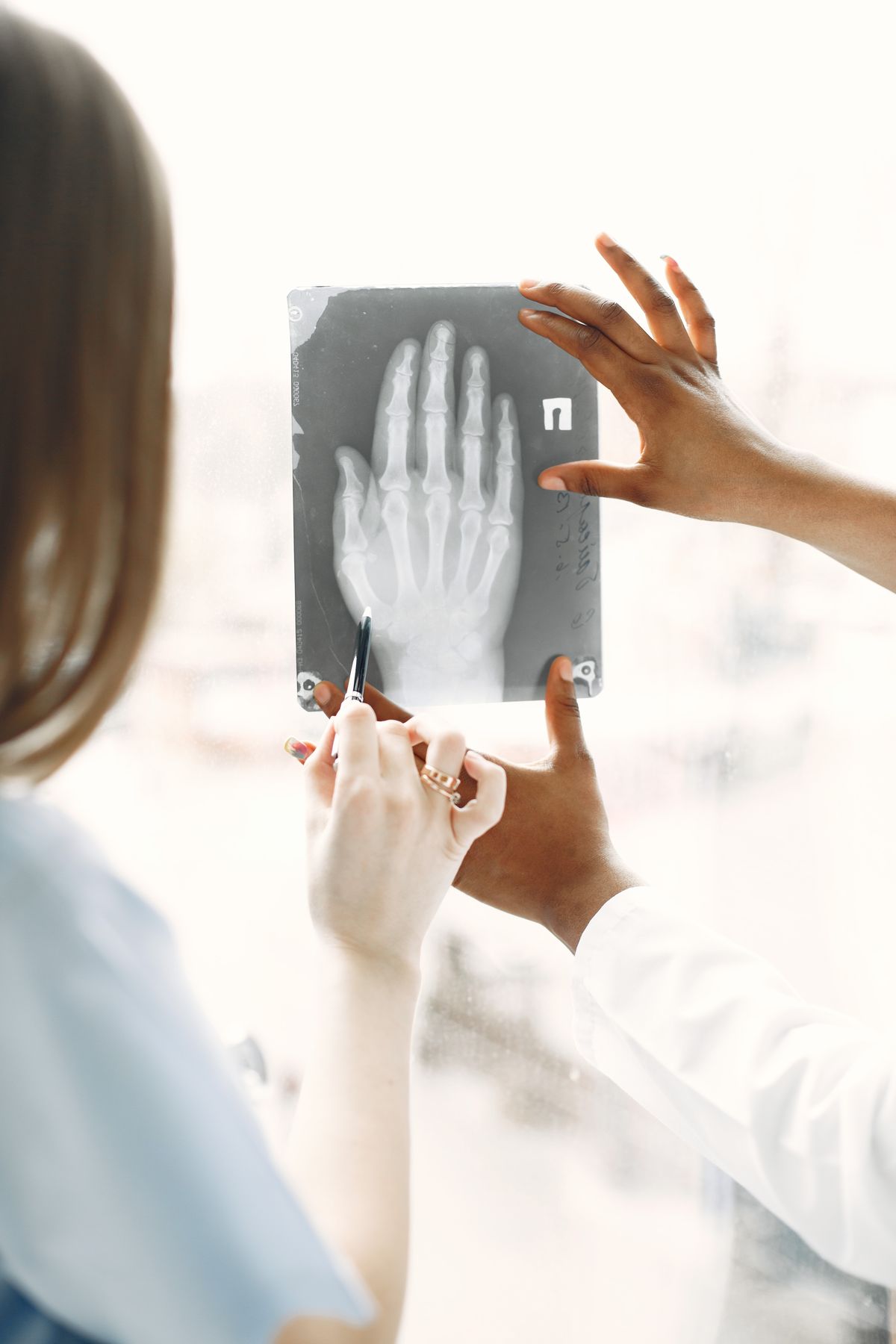
Why Hand OA Is a High-Volume, Under-Served Indication
Osteoarthritis of the hand and fingers (hand OA) is one of the most prevalent degenerative joint diseases, concentrated at the base of the thumb (the carpometacarpal, or CMC, joint) and the interphalangeal joints, where Heberden's and Bouchard's nodes develop. The hallmark symptoms — pain on exertion, morning stiffness, swelling, and loss of grip strength — directly impair everyday tasks such as opening a jar, writing, or turning a key. Prevalence rises with age and is especially high in post-menopausal women, making hand OA a large and recurring patient population in orthopaedic, rheumatology, and physiotherapy clinics.
For a clinic, hand OA is a compelling indication: most patients face only NSAIDs (with GI and renal risk), repeated corticosteroid injections (limited in number per year), splinting, or surgery. PEMF adds a non-invasive, drug-free option that targets the underlying joint pathology directly.
How PEMF Works on the Small Joints of the Hand
PEMF acts at the cellular level rather than only masking symptoms. The pulsed electromagnetic fields penetrate the superficial joints of the hand and act through three principal mechanisms:
- Increased mitochondrial ATP production — accelerating cellular repair processes in cartilage and surrounding tissue.
- Calcium-signaling regulation — supporting chondrocyte (cartilage cell) activity and matrix maintenance.
- Reduction of inflammatory mediators — lowering IL-6 and TNF-α, key drivers of chronic joint pain and cartilage degradation.
PEMF also promotes nitric oxide (NO) release, improving microcirculation to the joint. Because the hand joints are relatively superficial, field penetration to the treatment area is efficient. The treatment is non-thermal, non-invasive, and painless.
What the Research Shows for PEMF in Osteoarthritis
The evidence base for PEMF in osteoarthritis is well documented. The Cochrane systematic review (CD003523.pub2 — 9 trials, 636 participants) examined electromagnetic fields for osteoarthritis of the hands, hips, shoulders, and knees and found a pain reduction of about 15 points on a 0–100 scale versus placebo — with the hands explicitly included in the study population. In addition, a 2025 prospective multicenter randomized controlled trial (PMC11914662, n=91 across 5 orthopaedic clinics) reported a 36% pain reduction versus 10% with standard care (p<0.0001) and a 55% drop in medication use — a finding relevant to joint and soft-tissue pain broadly. Hand-specific evidence rests on this wider OA base; where higher certainty is required, treatment is combined with the clinic's standard clinical monitoring.
Clinical Protocol Principles
The protocol is grounded in the general PEMF joint-and-cartilage parameters documented in the Cochrane review (CD003523) and the 2025 RCT (PMC11914662), and in over 25 years of clinical experience across the PainFree network. Each protocol is individualized:
- Clinical assessment of the involved joint (CMC or interphalangeal), pain intensity, swelling, and range of motion.
- The patient is seated or lying down; the coils are positioned accordingly.
- The correct indication is selected — the system determines which applicators, waveform, and duty cycle to use.
- Treatment frequency: 1–2 sessions per week; for severe cases at the start, up to 3 per week with a rest day between sessions.
- A series of 3 or more sessions is typical, at the discretion of the physician/physiotherapist/practitioner. Improvement can sometimes be seen after just a few sessions, with full effect usually measured after several weeks.
Combining PEMF with physiotherapy, osteopathy, acupuncture, reflexology, medication, shockwave, hyperbaric oxygen, or infusion therapy generally improves outcomes — every technology has its place depending on the clinical situation and treatment goal.
PEMF vs. Conventional Hand-OA Treatments
| Parameter | PEMF | NSAIDs | Corticosteroid Injection | Splint / Physiotherapy |
|---|---|---|---|---|
| Nature of treatment | Non-invasive, no needle | Oral/topical | Invasive injection | Non-invasive |
| Side effects | Almost none | GI, renal | Tissue/tendon weakening; limited number per year | Almost none |
| Effect on tissue | Supports pain, blood flow and tissue recovery | Temporary anti-inflammatory | Local anti-inflammatory | Improves range and strength |
| Repeatability & combination | Unlimited repeat series; combines with any treatment | Limited over time | Limited (~3–4/year) | Unlimited |
| FDA clearance | Not for the devices we supply — no FDA 510(k) or PMA. Other PEMF devices hold 510(k) for pain/edema; clearance is granted per model, not to the technology. Our Magnetobox unit carries CE. | Yes | Yes | — |
| Approximate cost (Philippines) | ₱1,500–₱2,500/session | ₱200–₱800/month | ₱3,000–₱8,000/injection | ₱800–₱2,000/session |
In many cases PEMF allows a broader and deeper effect on the joint tissue, and the choice is not necessarily "either/or" — combining PEMF with physiotherapy, shockwave, or pharmacological treatment may amplify results.
Contraindications
- Implanted pacemaker or defibrillator
- Pregnancy
- Active malignancy (no scientific proof for this contraindication — observed for insurance reasons only)
- Active epilepsy — consult a neurologist
- Metal implant near the treatment area — assess individually
FAQ
Can PEMF replace corticosteroid injections or surgery for hand OA?
No. In the clinic, PEMF takes the place of other passive pain-reduction modalities such as TENS currents; manual therapy and active exercise continue together with it, and an injection or surgery, where indicated, stays the doctor's decision. Findings from clinical studies and accumulated clinical experience point to high success rates. The combination is what wins, and that is how 70+ Israeli clinics (population: 9M) apply it, now expanding to the Philippines. PainFree has over 25 years of experience.
Who can receive PEMF treatment for the hand?
Treatment is suitable for a wide range of patients, including athletes, children of any age, and adults with osteoarthritis. It is applied by physiotherapists, osteopaths, physicians, chiropractors, and integrative-medicine practitioners.
How soon do patients see improvement, and how many sessions are needed?
Improvement can sometimes be seen after just a few sessions, with full effect usually measured after several weeks. A series of 3 or more sessions is typical, at a frequency of 1–2 per week, at the practitioner's discretion.
Is PEMF supported by research for osteoarthritis?
Yes. The Cochrane review (CD003523, hands included) found meaningful pain reduction versus placebo, and the 2025 multicenter RCT (PMC11914662) reported a 36% pain reduction and 55% medication reduction for joint and soft-tissue pain.
What This Means for Clinic Investors
Hand OA is a chronic condition that brings patients back over time, making it a strong therapeutic and business opportunity for a clinic. The treatment requires no supervision during the session — which, first and foremost, delivers better clinical outcomes per the research, and also increases revenue. Adding a PainFree PEMF system lets a clinic treat a far wider range of indications — hand OA, carpal tunnel syndrome, tendinopathies, post-surgical recovery — and offer differentiated value that no single conventional modality can match. Over 70 Israeli clinics serving a population of 9M already integrate the technology, which is now expanding to the Philippines.
Interested in adding PEMF to your clinic?
Request the full investment brief — machine specs, financials, and site selection for the Philippines market.
Request Investment Brief →