June 2026 · 8 min read · Sports Rehabilitation Protocol
What Is a Knee Ligament Injury?
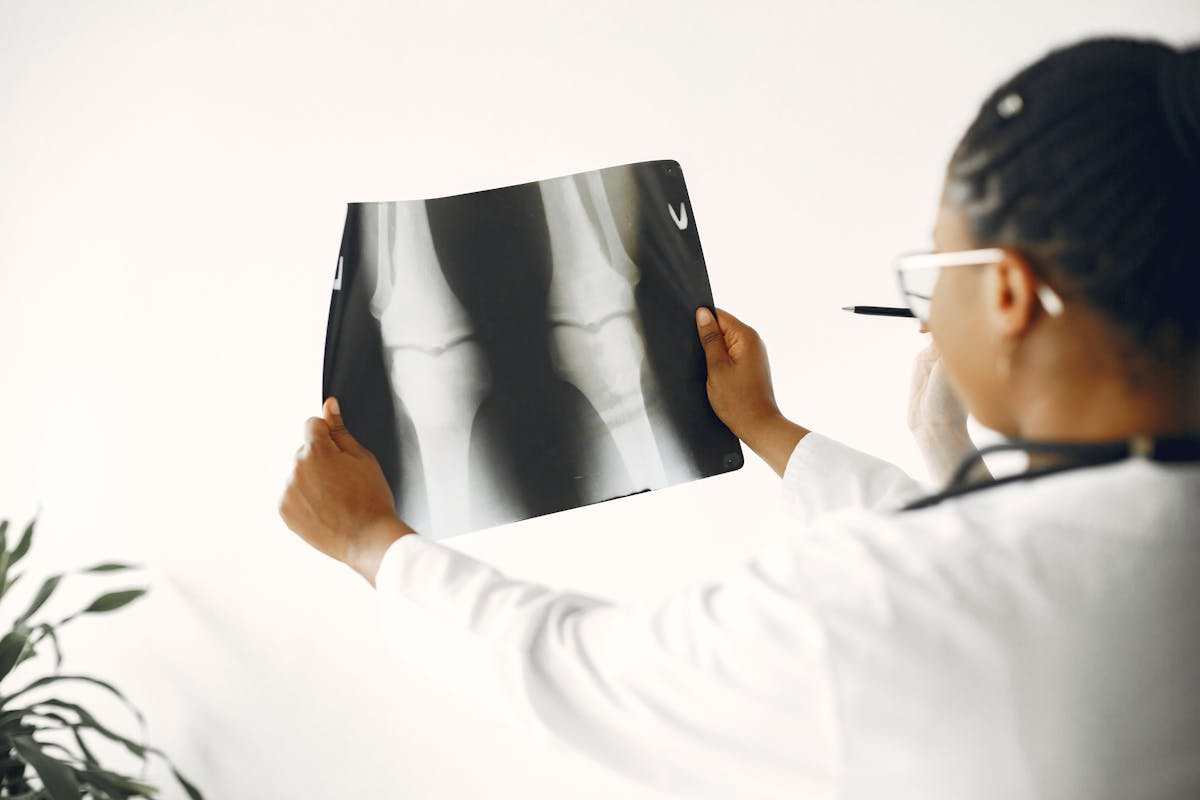
A knee ligament injury — a sprain, partial tear, or complete rupture of the anterior cruciate ligament (ACL) or the medial collateral ligament (MCL) — is one of the most common sports injuries seen in orthopedic and rehabilitation clinics. The knee ligaments stabilize the joint during pivoting, deceleration, and changes of direction; injury typically occurs in sports rich in stops and rotations.
Ligaments are connective tissue with poor vascularity, which makes healing slow. Recovery centers on a structured functional rehabilitation program — progressive strengthening, range-of-motion, and stability work — the standard, evidence-based treatment, which continues together with PEMF. PEMF is used as a non-invasive treatment that supports pain control, edema drainage, and the tissue-repair environment.
An Honest View of the Evidence
It is important to present the evidence honestly. There is not yet a dedicated randomized controlled trial of PEMF specifically for ACL or MCL tears. The available evidence is drawn from soft-tissue pain research and from PEMF's mechanism of action.
The 2025 multicenter RCT (PMC11914662, n=91 completers across 5 orthopedic clinics) examined PEMF for musculoskeletal and soft-tissue pain. It found a 36% pain reduction versus 10% in standard care (p<0.0001), with a 55% reduction in pain-medication use. Ligament and tendon injuries fall within this soft-tissue category. PEMF may therefore help reduce pain and support rehabilitation, with functional rehab continuing together with it. FDA-cleared PEMF devices are used worldwide as part of rehabilitation and pain-management programs.
How PEMF Supports Ligament Rehabilitation
PEMF works through several recognized physiological mechanisms that support connective-tissue repair:
- Improved local microcirculation — increasing oxygen and nutrient delivery to the poorly vascularized injured ligament.
- Reduced inflammatory processes — modulation of pro-inflammatory cytokines and reduction of swelling around the joint.
- Enhanced cellular activity — increased metabolic and ATP activity in connective-tissue cells, supporting collagen production.
- Support for tissue repair — promotion of angiogenesis and reorganization of collagen fibers within the ligament.
- Reduced pain-signal transmission — local modulation of pain signaling, enabling a gradual return to loading and exercise.
These mechanisms were described in the review by Strauch et al., 2009, Aesthetic Surgery Journal (Albert Einstein College of Medicine, PubMed 19371845), linking PEMF to inflammation regulation, improved soft-tissue healing, and angiogenesis. This is a general mechanism review, not a knee-ligament-specific trial.
Who Is This Protocol For?
Suitable candidates include footballers, basketball and tennis players, skiers, cyclists, dancers, and gymnasts; amateur and professional athletes and children of all ages; patients after ACL reconstruction who need rehabilitation support; and patients with partial tears or sprains managed conservatively. PEMF works together with functional rehabilitation, quadriceps strengthening, and graded range-of-motion work.
The Clinical PEMF Protocol
The protocol is grounded in the general parameters of PEMF in connective tissue, the soft-tissue pain evidence (PMC11914662), and over 25 years of clinical experience — it is derived from mechanism and evidence, not invented arbitrarily.
- The patient is seated or lying down; the coils are positioned over the knee region.
- The correct indication is selected — the system determines the appropriate emitters, waveform, and duty cycle.
- Treatment frequency is 1–2 times per week; in severe cases, up to 3 times per week initially with a rest day between sessions.
- A series of 3 or more treatments, typically per the physician's / physiotherapist's / practitioner's judgment.
Initial improvement can sometimes be felt after just a few treatments, while fuller improvement is usually measured after several weeks of combined treatment. Combining PEMF with osteopathy, physiotherapy, acupuncture, reflexology, medication, shockwave, hyperbaric therapy, or infusions will generally improve outcomes.
PEMF vs. Functional Rehab, Shockwave and Medication
Every technology has its place depending on the clinical situation and treatment goal. Functional rehabilitation (RICE in the acute phase plus strengthening) is standard care; shockwave (ESWT) may help in chronic cases; and NSAIDs offer only temporary relief. PEMF adds a cumulative, non-invasive effect supporting pain reduction and edema control. In many cases, combining PEMF with physiotherapy or shockwave may amplify results — so the choice is not necessarily "either/or."
| Parameter | PEMF | Functional Rehab (RICE + PT) | Shockwave (ESWT) | NSAIDs |
|---|---|---|---|---|
| Treatment type | Non-invasive, no needle | Active exercise, relative rest | External, mechanical stimulation | Oral medication |
| Effect over time | Cumulative and lasting | Foundational and lasting — the cornerstone | Variable, cumulative over a series | Temporary only |
| Patient experience | Comfortable, painless | Controlled discomfort during exercise | Possible transient local pain | Painless when taken |
| Staff supervision | No close supervision during session | Physiotherapist presence required | Continuous manual operation required | No clinic staff required |
| FDA status | Not for the devices we supply — no FDA 510(k) or PMA. Other PEMF devices hold 510(k) for pain/edema; clearance is granted per model, not to the technology. Our Magnetobox unit carries CE. | Accepted standard of care | Cleared for orthopedic indications | Medically approved |
| Session cost (Philippines) | ₱1,500–₱2,500 | Varies by program | ₱2,000–₱4,000/session | Ongoing pharmacy cost |
PEMF and shockwave can be combined, with functional rehab continuing together with them.
The Clinic Investment Case
Knee ligament and sports-rehabilitation patients are valuable PEMF clients: they present with an injury requiring a structured course of sessions plus combination with active rehab, and they are motivated to return to sport. PEMF runs without close supervision, letting staff treat additional patients in parallel and improving clinic throughput. The 70+ Israeli clinics serving a population of 9M — now expanding to the Philippines — have validated this model over a decade of clinical experience.
Interested in adding evidence-based sports-rehabilitation PEMF to your Philippine clinic? Request the full investor and implementation brief.
Request Investment Brief →Frequently Asked Questions
Is PEMF treatment for the knee painful?
No. PEMF is non-invasive and painless; many patients describe a pleasant sense of relaxation during the session. The modality has been in regulated clinical use for decades and has no systemic side effects.
When can a patient return to sport after a ligament injury?
Return to activity is determined by the physician and physiotherapist based on injury severity and rehab progress. Pain improvement can sometimes be felt within a few sessions, while full return to pivoting sports is gradual and follows the restoration of strength and stability.
Does PEMF replace physiotherapy and rehabilitation?
No. You do not have to choose: PEMF leads the clinic treatment, and the functional rehabilitation, strengthening and range-of-motion work you already do continue together with it.
Is the treatment appropriate after ACL reconstruction surgery?
In many cases yes — PEMF may support pain and edema control after surgery and as part of the rehabilitation program, but the decision depends on the surgeon's and physiotherapist's guidance.
Who can receive PEMF treatment?
It suits a wide range — athletes, children of all ages, and patients in rehabilitation. Contraindications include pregnancy, active malignancy, a pacemaker, and active epilepsy (consult a neurologist).