October 2026 · 11 min read · Foot Pain Guide
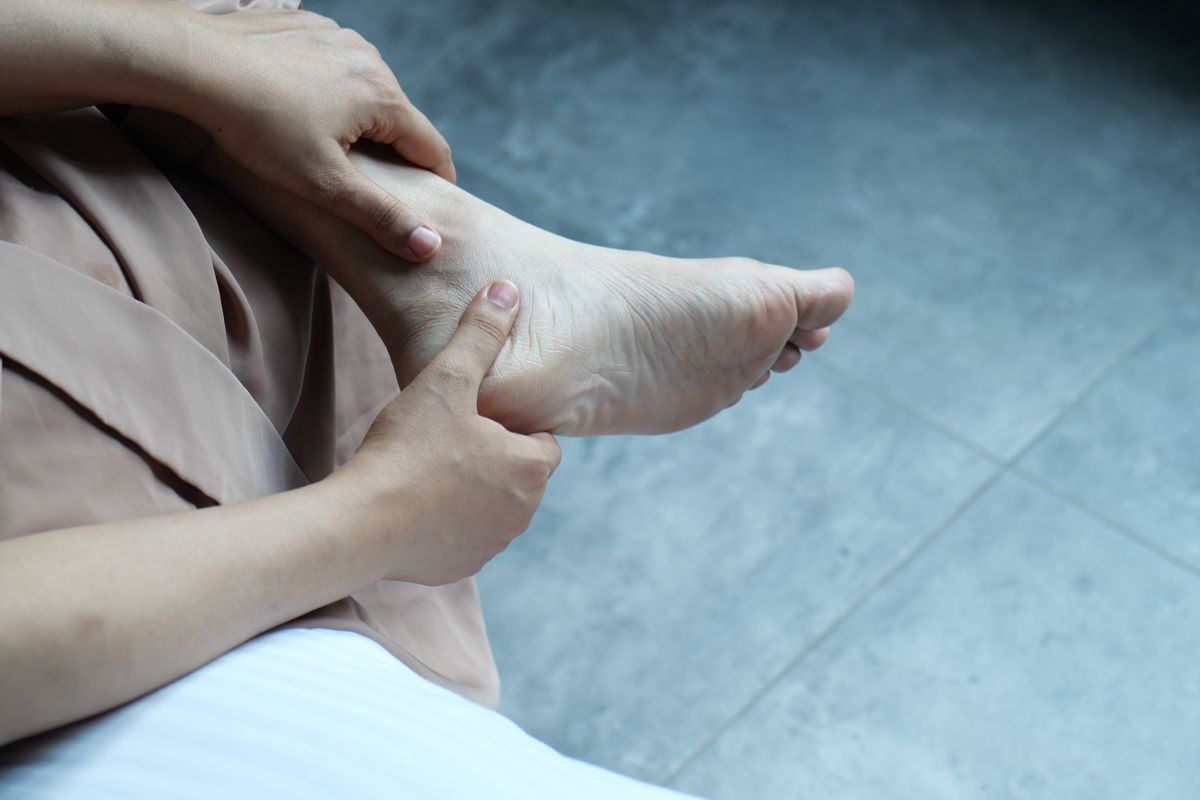
Does the first step in the morning feel like a knife in your heel? Does your ankle swell and stiffen after a day on your feet?
When your foot hurts, the whole day is built around the pain: getting out of bed, standing at work, walking with the grandchildren. You have tried insoles, new shoes and stretches, and the pain still comes back. The good news? It does not have to be your fate.
PainFree’s pulsed electromagnetic fields (PEMF) bring your foot an advanced, non-invasive treatment — no needles, no injections and no medication — together with the physiotherapy and exercises you already do, so you can get up in the morning and step down without bracing for that first step. The treatment is delivered in 70+ Israeli clinics serving a population of 9M — now expanding to the Philippines.
🔬 Proven in research: in a multicentre, double-blind trial in 70 patients with heel pain (plantar fasciitis) (Journal of Foot and Ankle Surgery, 2012), electromagnetic pulses from a wearable device (PRFE) cut morning heel pain by 40% within a week — compared with only 7% with a sham device (the study on PubMed).
A Painful Foot Is Not “Just Another Pain”
Your foot carries the whole weight of your body with every step you take. When it hurts, you cannot “rest it” the way you rest a shoulder or a hand: you walk differently, you lean on the other side, you give up the evening walk — and after a few weeks the knee, the hip and the back start to hurt too. Most people who come to us have already seen a doctor, received a diagnosis and tried a few things. What they are looking for is a way to break this cycle and get back to their routine.
This page is the starting point: according to where it hurts and the time of day the pain appears, you will find the detailed guide for your condition, the treatment roadmap and what the studies actually found.
🔍 Self-Check: Where Exactly Does Your Foot Hurt?
Where the pain sits and the moment it appears tell almost the whole story. Find the description closest to what you feel, and go to the full guide:
👣 Pain in the Heel and the Sole of the Foot
- Heel spur: a sharp stab in the centre of the heel with the first steps out of bed or after sitting for a long time, which softens a little after a few minutes of walking and returns at the end of the day.
- Plantar fasciitis (inflammation of the plantar fascia): pain along the arch and on the inner part of the heel, which gets worse after long standing, walking barefoot on a hard surface or a sudden increase in how much you walk.
🦶 Pain Behind the Heel and in the Achilles Tendon
- Achilles tendonitis: pain and stiffness in the thick tendon above the heel, mainly in the morning and in the first minutes of a run or a brisk walk. Runners and athletes have a separate guide: the Achilles in runners.
- Achilles pain where it joins the heel: pain at the exact spot where the tendon enters the heel bone, sometimes with a hard bump and rubbing from the back of the shoe.
🩹 Pain in the Ankle and the Arch of the Foot
- Ankle sprain: after the ankle “rolls” — swelling, bruising on the outer side and difficulty putting weight on the foot. An ankle that sprains again and again starts here too.
- Collapsing arch (PTTD): pain on the inner side of the ankle, an arch that keeps sinking over the years, and difficulty standing on tiptoe on one leg.
- Cartilage wear in the foot: deep pain and stiffness in the joints of the midfoot or at the base of the big toe, which get worse with long walks and narrow shoes.
General ankle and foot pain and it is not yet clear where it comes from? Start with our guide to ankle and foot pain, and if the pain also sits in the heel, read about heel spurs and heel pain.
⚡ Burning, Numbness and “Electric Shocks” in the Foot
- Tarsal tunnel syndrome: numbness, burning and an electric-shock feeling in the foot and on the inner side of the ankle, which get worse with long standing or at night.
- Morton’s neuroma: burning and pain in the ball of the foot, usually between the third and fourth toes, and a feeling that there is a stone inside your shoe.
- Neuropathic pain in the feet: burning, tingling and numbness in both feet, starting in the toes and gradually rising, mostly in people with diabetes and mostly at night. And if the burning began after cancer treatment, read about neuropathy after chemotherapy.
And two conditions that are felt in the foot but start somewhere else: pain that travels down from the back or the buttock all the way to the foot fits sciatica and a herniated disc better, and pain along the shin bone in runners fits shin splints.
🛠 The Roadmap: How Is Foot Pain Treated?
Pulsed electromagnetic fields (PEMF) open the roadmap: they pass through the skin to the heel, the tendon and the ankle, with no needle and no incision, to bring down the pain that stops you from stepping down and exercising. And that is exactly the cycle that needs breaking: the heel hurts, so it is hard to stretch and train; without stretching and training the tissue does not get stronger, so the heel keeps hurting. To get out of that cycle, your foot needs a powerful technological push. This is the order, from the lightest to the heaviest:
- Pulsed electromagnetic field (PEMF) technology: a pleasant, non-invasive treatment that reaches deep into the tissues of the foot without heating them. In a controlled trial against a sham device, morning heel pain fell as early as the first week (40% versus 7% with the sham device), and once the stabbing settles, your exercise programme can finally move forward.
- Insoles and supportive shoes: they spread the load away from the heel and the arch and correct the way you step. A good insole is worth a lot, especially with a heel spur and a collapsing arch.
- Physiotherapy, stretching and graded exercise: stretching the calf and the plantar fascia, strengthening the muscles of the foot and eccentric exercise for the Achilles tendon. Exercise rebuilds the tissue, so it matters to keep at it even once the pain has come down.
- Injections: a steroid injection into the heel or the ankle sometimes calms the pain for a short time, but it involves a needle and is not repeated again and again.
- Surgery: considered only when the pain and the limitation go on for many months despite all the previous steps, and always after an orthopaedic assessment.
Most people never need to reach the last two steps. The earlier you start, the easier it is to get back to standing and walking without pain.
🔬 What Do the Studies Say About Pulsed Electromagnetic Fields and Foot Pain?
Pulsed electromagnetic fields (PEMF) have been tested in the foot and ankle in several controlled trials, and the strongest evidence is in heel pain. These are the findings, including the ones that found no advantage:
- Heel pain (plantar fasciitis): in a multicentre, double-blind trial (Journal of Foot and Ankle Surgery, 2012), 70 patients wore at night either a device that emits radio-frequency electromagnetic pulses or a sham device. After 7 nights, morning pain fell by 40% in the treatment group and by 7% in the sham group (the study on PubMed).
- Heel pain, a second trial: in a randomised trial in 40 patients with plantar fasciitis (Bioelectromagnetics, 2026), those who received pulsed electromagnetic fields together with physiotherapy reported less pain in the evening and better foot function (the FFI score) than those who received physiotherapy only (the study on PubMed).
- Soft-tissue injuries of the foot and ankle: a systematic review of 4 randomised trials in 243 patients (Frontiers in Sports and Active Living, 2026) found a significant reduction in pain in 3 of the 4 trials. In most of them, patients received the pulses together with insoles, exercises or shockwave therapy (the study on PubMed).
- Achilles tendon: in a controlled trial in 65 patients with Achilles tendinopathy (Orthopaedic Journal of Sports Medicine, 2024), both groups improved a great deal with eccentric exercise, but the pulses added no significant advantage over the sham device (the study on PubMed).
- Diabetic neuropathy: in the largest trial in the feet of people with diabetes (225 patients, Archives of Physical Medicine and Rehabilitation, 2009), pain did not fall more than with the sham treatment; more patients reported an overall improvement in symptoms, 44% versus 31% (the study on PubMed).
What is important to know: the 2012 trial tested a radio-frequency device (PRFE), which is different from low-frequency PEMF devices; the result was measured on day 7 only, and no significant difference was found between the groups in evening pain. The 2026 trial had no sham group, and no difference was found between the groups in morning pain. The foot-and-ankle review is small, and the trials in it differ from one another. In the Achilles tendon and in diabetic neuropathy, the trials found no reduction in pain beyond sham. All the studies were done with devices from different manufacturers.
🎯 Pulse Treatment at PainFree: Step Down in the Morning Without Fearing the First Step
PainFree’s pulsed electromagnetic fields are delivered in 70+ Israeli clinics serving a population of 9M — now expanding to the Philippines — close to home, with a team that knows the painful foot well. It starts with a suitability assessment: where it hurts, when, and what you have already tried, and then a course of sessions is built for your heel, your arch or your ankle.
Why pulsed electromagnetic fields at PainFree?
- ⏱️ Proof in the heel, not stories: in a double-blind trial in heel pain, morning pain fell by 40% after one week, versus 7% in the sham group.
- 🎯 Aimed at the source of the pain: the treatment is directed at the heel, the tendon or the ankle itself, without loading the body with painkillers for months on end.
- 👟 Your insoles and exercises get a chance: once the stabbing in the heel settles, it is much easier to keep up the stretches and the programme your physiotherapist gave you.
- 📍 Now in the Philippines: sessions at PainFree partner clinics are typically ₱1,500–₱2,500/session.
Stop suffering all over again with every step. Give your foot the conditions to walk again.
🚩 When Does Foot Pain Need a Doctor Today?
Most foot pain is not dangerous, but there are signs where you do not wait. If any of these happens to you, go to a doctor or the emergency room the same day — not to PEMF treatment:
- A warm, red, swollen foot or ankle, together with fever or chills (a suspected infection).
- A wound on the foot that does not close, redness that spreads or a change in skin colour, especially in people with diabetes.
- Being unable to put weight on the leg after a fall, a blow or the ankle “rolling” (a suspected fracture).
- A feeling of a kick or a “pop” behind the heel, followed by difficulty standing on tiptoe (a suspected Achilles tendon rupture).
- A swollen, warm, painful calf in one leg (a suspected deep vein thrombosis), and especially if there is also shortness of breath or chest pain.
- A cold, pale or bluish foot, or calf pain that appears with every walk and disappears at rest (a suspected circulation problem).
- Sudden weakness in the foot, difficulty lifting the front of the foot, or numbness that spreads quickly.
Frequently Asked Questions About Foot Pain
Why does my heel hurt precisely with the first steps in the morning?
During the night the plantar fascia, the band under the foot, shortens and tightens. With the first step it is stretched all at once, and that brings the sharp stab. After a few minutes the tissue warms up and the pain settles, until the next long stretch of standing. This is the classic sign of a heel spur and of plantar fasciitis.
What is the difference between a heel spur and plantar fasciitis?
A heel spur is a small bony projection seen on an X-ray of the heel, and plantar fasciitis is the load and irritation in the band itself. Most of the pain comes from the band, which is why some people have a spur on the X-ray and no pain at all, and others are in a lot of pain without any spur. In everyday speech both words are used for the same pain.
Do the pulses come instead of insoles and physiotherapy?
No — the pulses don’t come instead of physiotherapy; they are what lets you do it and keep at it. The insoles take load off, the exercise strengthens the tissue, and the pulse treatment brings down the pain that makes many people stop exercising after a week.
How soon do you feel a change?
Pulse treatment is given as a course, and the number of sessions is set with you at the suitability assessment according to your condition and how long you have had the pain. In the heel-pain trial, the difference against the sham device was measured after only one week. It is worth writing down before the first session how much your first step in the morning hurts, on a scale from zero to ten, and comparing after a few sessions.
I have diabetes and my feet burn. Is this suitable for me?
Pulsed electromagnetic fields have also been tested in the burning feet of people with diabetes, and the picture there is different from the heel: in the largest trial, pain did not fall more than with a sham treatment, although more patients reported an overall improvement. So with neuropathy we start with a suitability assessment and a personal measurement of the burning, sleep and walking, and the treatment your doctor prescribed continues. A wound that does not close is a reason to see a doctor the same day.
When must pulsed electromagnetic fields not be used?
The absolute contraindications are a pacemaker or an implanted defibrillator, pregnancy, and an active malignancy in the treatment area. Metal implants near the area, epilepsy or an overactive thyroid need to be discussed in advance. All of these are checked with you at the suitability assessment, before the first session.
📋 Table: Where It Hurts, When, and Which Guide to Read
| Where it hurts | When it gets worse | What it probably is |
|---|---|---|
| Centre of the heel, underneath | The first step in the morning, getting up from a chair | Heel spur / plantar fasciitis |
| The tendon above the heel | The start of a run, uphill, the morning | Achilles tendonitis |
| The outer side of the ankle | After the ankle “rolls”, on uneven ground | Ankle sprain |
| The inner side of the ankle and the arch | Long walks, standing on tiptoe | Collapsing arch (PTTD) |
| Midfoot, base of the big toe | Long walks, narrow shoes | Cartilage wear in the foot |
| Ball of the foot, between the toes | Narrow shoes, high heels | Morton’s neuroma |
| Burning on the inner side of the foot | Long standing, at night | Tarsal tunnel syndrome |
| Burning in both feet | At rest and at night | Diabetic neuropathy |
Is Your Foot Holding You Back? Come for a Suitability Assessment
Pulsed electromagnetic field treatment brings the pain down so you can walk again without thinking about every step. Leave your details and we will arrange a no-obligation suitability assessment at the clinic closest to you. Don’t wait for it to get worse.
Heel, arch and ankle pain send people back to the clinic week after week — one of the most common reasons patients look for a non-invasive treatment. Interested in adding PEMF to your clinic? Request the full investment brief — machine specs, financials, and site selection for the Philippines market.
Request Investment Brief →